Yellowfin Tuna
Thunnus albacaresAtún aleta amarilla
A schooling offshore tuna caught by trolling, bait fishing, casting and jigging. Fish size and school location determine tackle and trip range.
- Planning window
- June–November emphasis
- Where it lives
- Open ocean
- Fishing approach
- Trolling, bait, casting or jigs to suit the school
- What matters most
- Match tackle and trip range to actual fish
Fishing for yellowfin tuna
Yellowfin tuna can turn a Cabo day into a moving search across a large stretch of ocean. Some schools offer surface action; others stay down or refuse obvious presentations. Fish size, school behavior and the distance to recent activity are more useful booking details than the simple phrase “tuna trip.”
Tell the operator whether you want a realistic chance at a legal fish for dinner, active casting or a dedicated larger-tuna effort. Those goals may require different tackle, more time, a different boat and different expectations for the rest of the group.
How to identify yellowfin tuna
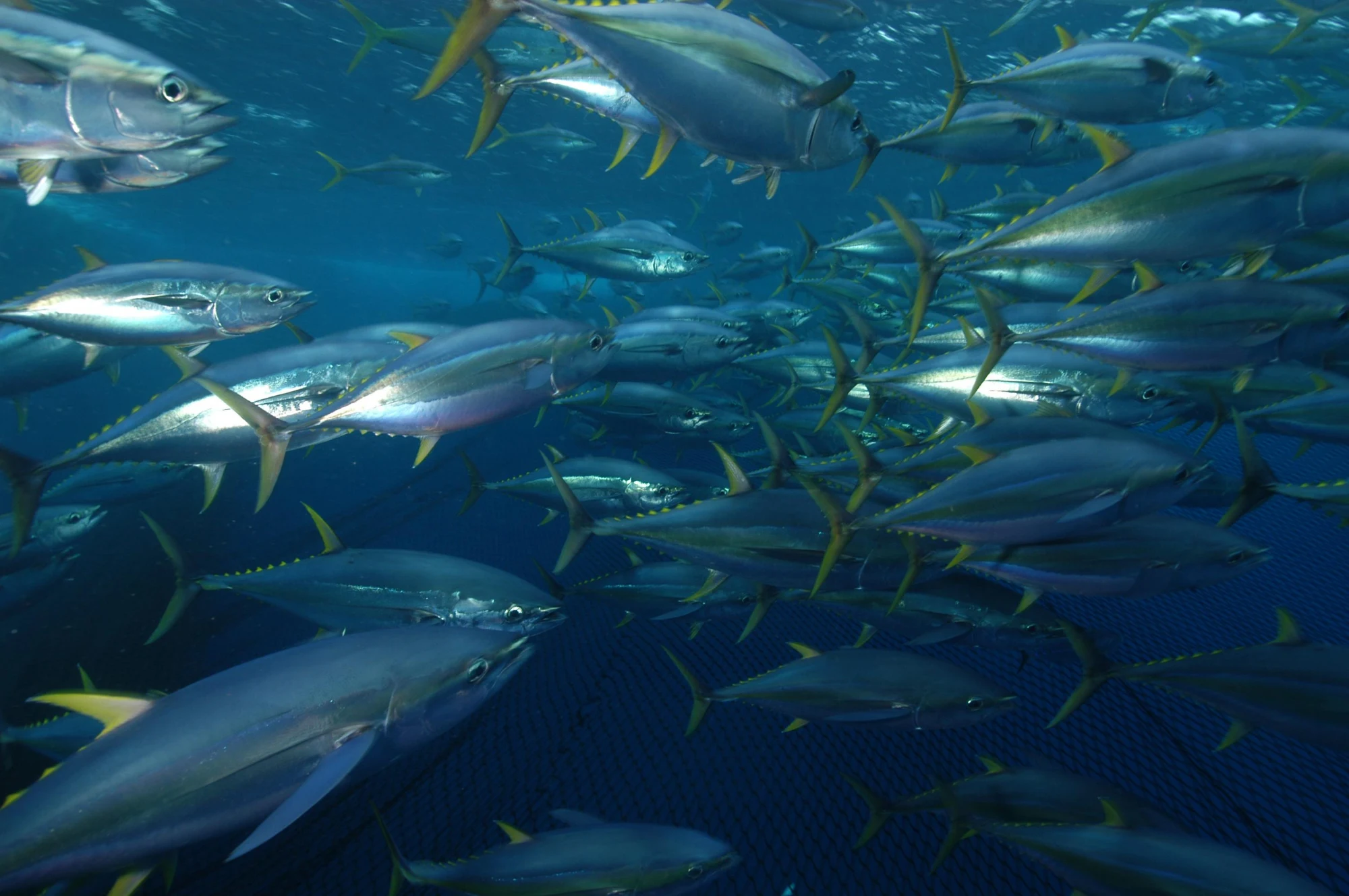
Yellow fins and finlets contrast with a dark metallic back and silver lower body. Larger yellowfin often develop long, curved second dorsal and anal fins; smaller fish can be harder to separate from related tunas.
Do not identify every small dark tuna as a yellowfin. True skipjack have longitudinal dark markings on the lower body, while other locally named tunas can look different. The crew should confirm the catch before applying retention or food-handling decisions.
Biology and identification: NOAA Fisheries: species biology and habitat (opens in a new tab) ↗
Seasons in Los Cabos
The local Pacific-side guide emphasizes June–November. Actual tuna availability is less tidy: moving water, forage and school location can produce opportunities outside a calendar or put fish beyond a particular charter’s range.
Ask when and where the last relevant report occurred, what size fish were involved and whether the same boat can reach them within your booked hours. A report from a much longer trip is not a fair forecast for a half day.
Local calendar: BCS association’s Pacific-side guide (opens in a new tab) ↗.
Compare the full seasonal pictureHabitat and fishing grounds
Yellowfin may gather around floating material, productive current edges and other marine animals. Association with dolphins is a documented part of their ecology, not a guarantee that every pod has catchable tuna.
Watch wildlife without chasing, surrounding or cutting through it. Open-water fishing can demand a lot of searching. A visible surface school may feed on very small prey or sink before the boat is in casting position.
Understand Cabo’s coasts, banks and accessFishing methods for yellowfin tuna
Trolling to find a school
A searching spread may locate fish before the crew changes methods. Once a school is found, the next presentation should match its depth, prey and response—not simply repeat the first lure indefinitely.
Bait and controlled drift
Natural bait can be effective when fish will rise or hold near the boat. Leader visibility, bait condition and safe separation between anglers matter. Let the crew choose tackle strong enough for the fish, not just thin enough to gain a bite.
Poppers, stickbaits and jigs
Casting makes sense when fish are reachable and feeding high; jigs address a deeper mark. Both can be demanding. Confirm suitable rods, harness options and the ability to accommodate multiple anglers without tangling lines.
Ask these questions before booking
- Is this a mixed offshore trip or a dedicated large-tuna trip, and what fish size is the tackle actually prepared for?
- Are fuel, bait, extra hours and any processing or storage charges included?
- If retaining a fish, is there enough ice and insulated space for the catch—not just a cooler for drinks?
Tell the operator about your experience, preferred method and group. Agree on the target, time on the water and release plan before the trip.
Handling and release
Fight larger tuna with a properly fitted harness or the boat’s chair system and clear instructions from the crew. Keep loose line away from hands, feet and clothing; never attempt to hand-brake a running line.
Plan any retention around identification, current limits and how much fish you can use. Prompt chilling is essential. Raw serving is a separate food-safety decision, not something made safe simply because the tuna was caught that morning.
Handling reference: IGFA release guidance (opens in a new tab) ↗.
Check licensing, limits and protected-area rulesQuestions about yellowfin tuna
Does seeing dolphins mean tuna are underneath?
Not necessarily. Yellowfin do associate with dolphins, but a pod alone does not establish that tuna are present, feeding or reachable. A responsible crew observes the situation without harassing marine mammals.
Can I target yellowfin on a short Cabo charter?
Only if relevant activity lies within a sensible operating range. Ask about actual travel time, recent school location and fishing time left after the run. A dedicated distant-water tuna plan may need a longer trip.
Are all tuna caught in Cabo yellowfin?
No. Skipjack and other tuna-like fishes also occur. Common names such as bonito can be imprecise, so use markings and the crew’s identification rather than assuming every tuna-shaped fish is yellowfin.
Sources
These references cover identification, biology and regional fishing patterns. Follow the local calendar for seasonal context and the Mexican regulations guide for permits, retention and protected areas.
 Open ocean
Skipjack Tuna
Katsuwonus pelamis
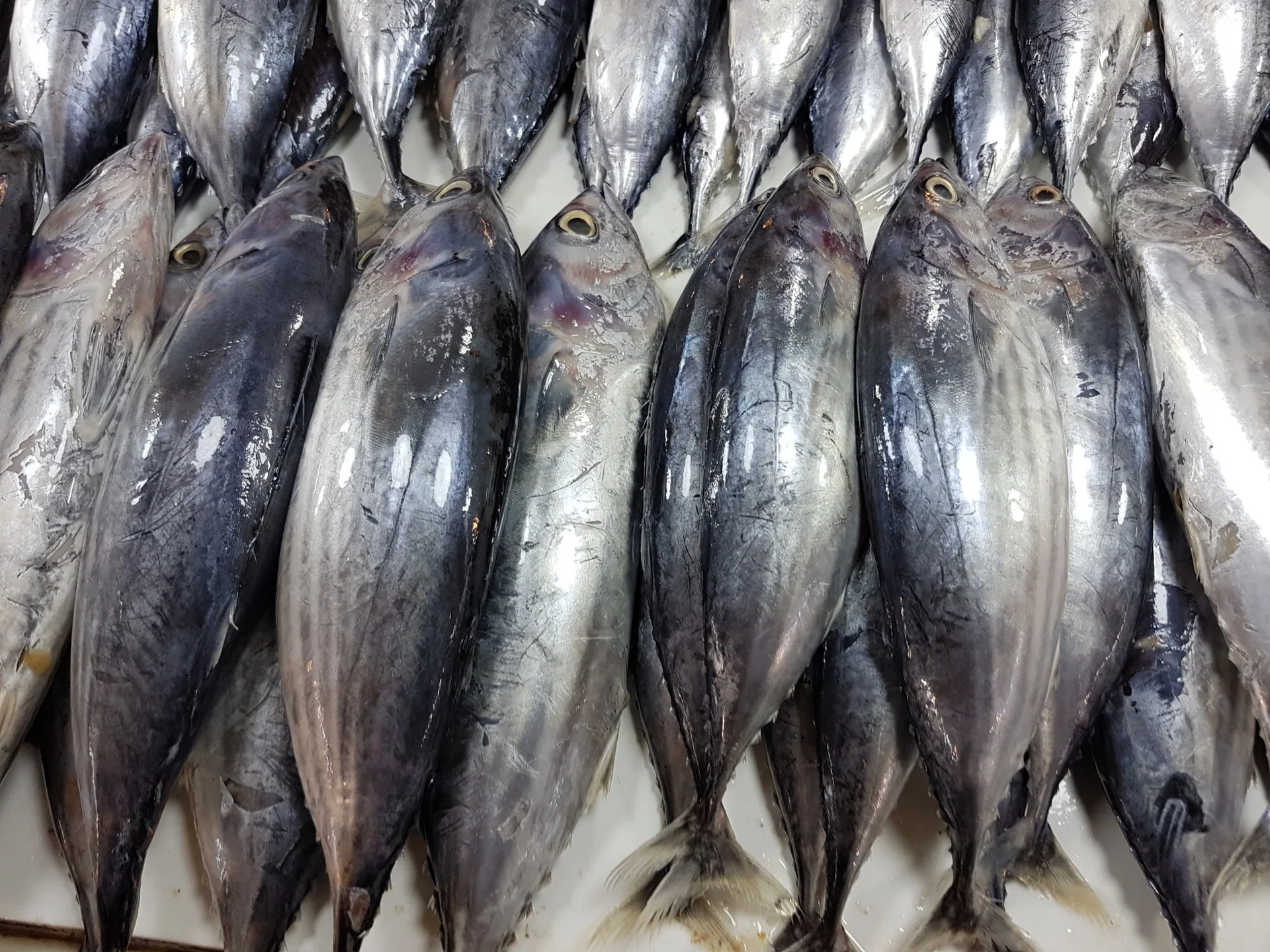
A schooling tuna with dark lower-body stripes. Identify the catch carefully: “bonito” and “skipjack” are not always used consistently at the dock.
Broad and variable; follow active schools
 Open ocean
Dorado
Coryphaena hippurus
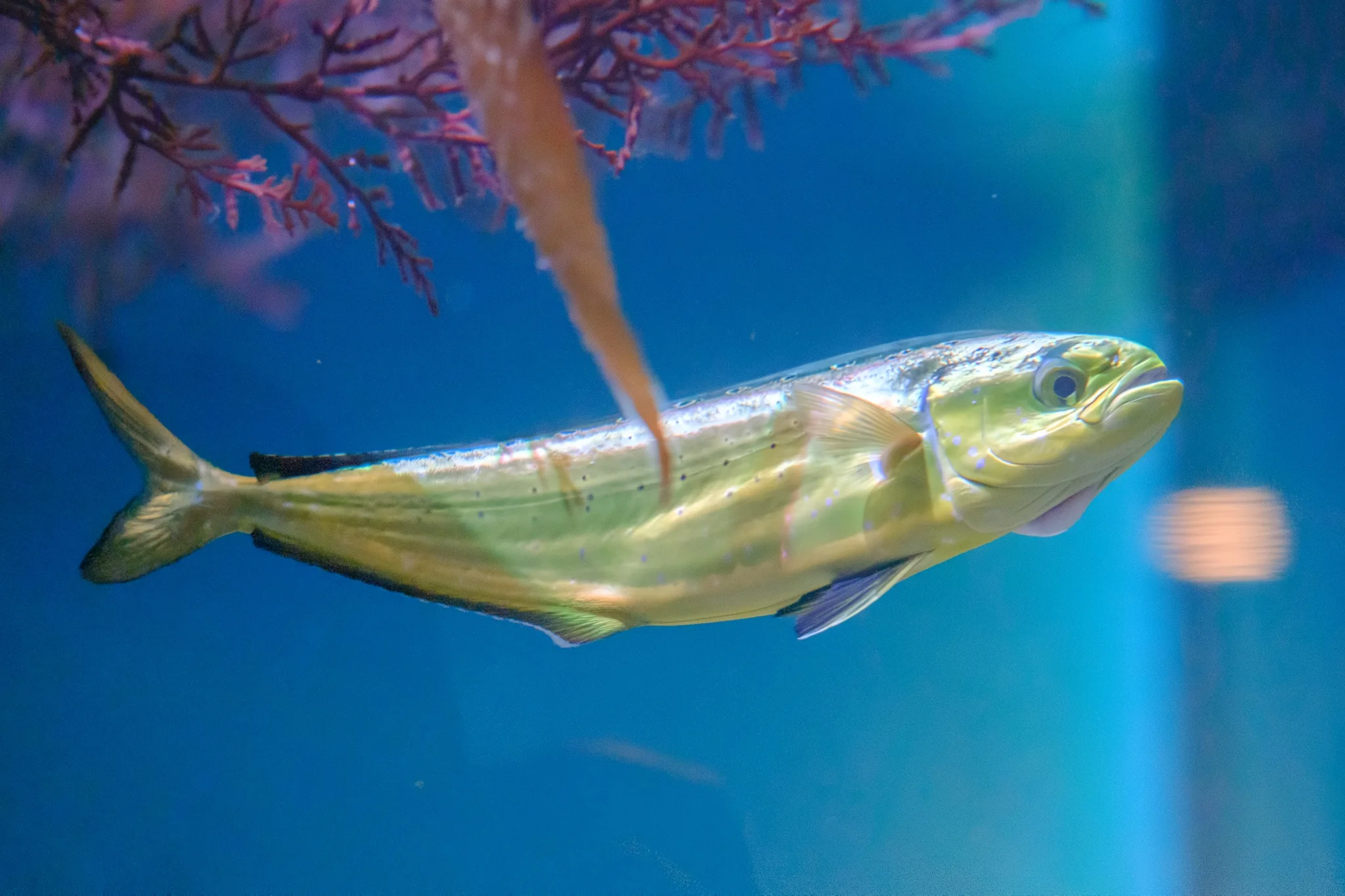
Also called mahi-mahi, dorado use warm surface water and floating habitat. Crews target them with trolling lures, bait, casting tackle and flies.
June–October emphasis
 Open ocean
Blue Marlin
Makaira nigricans
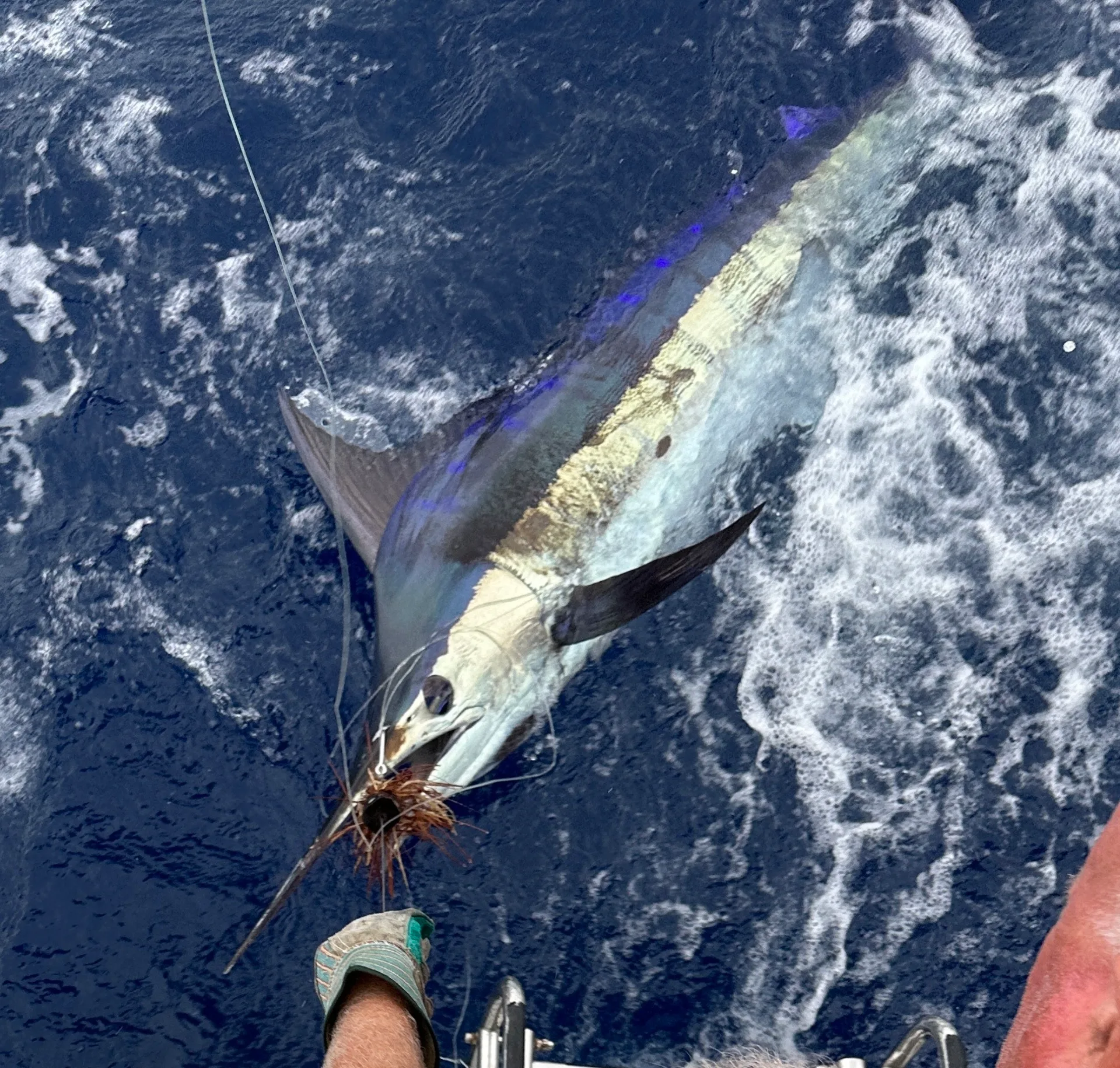
A warm-water billfish targeted offshore with trolling lures and bait. Boat range, tackle and release procedures need to suit large fish.
June–November emphasis