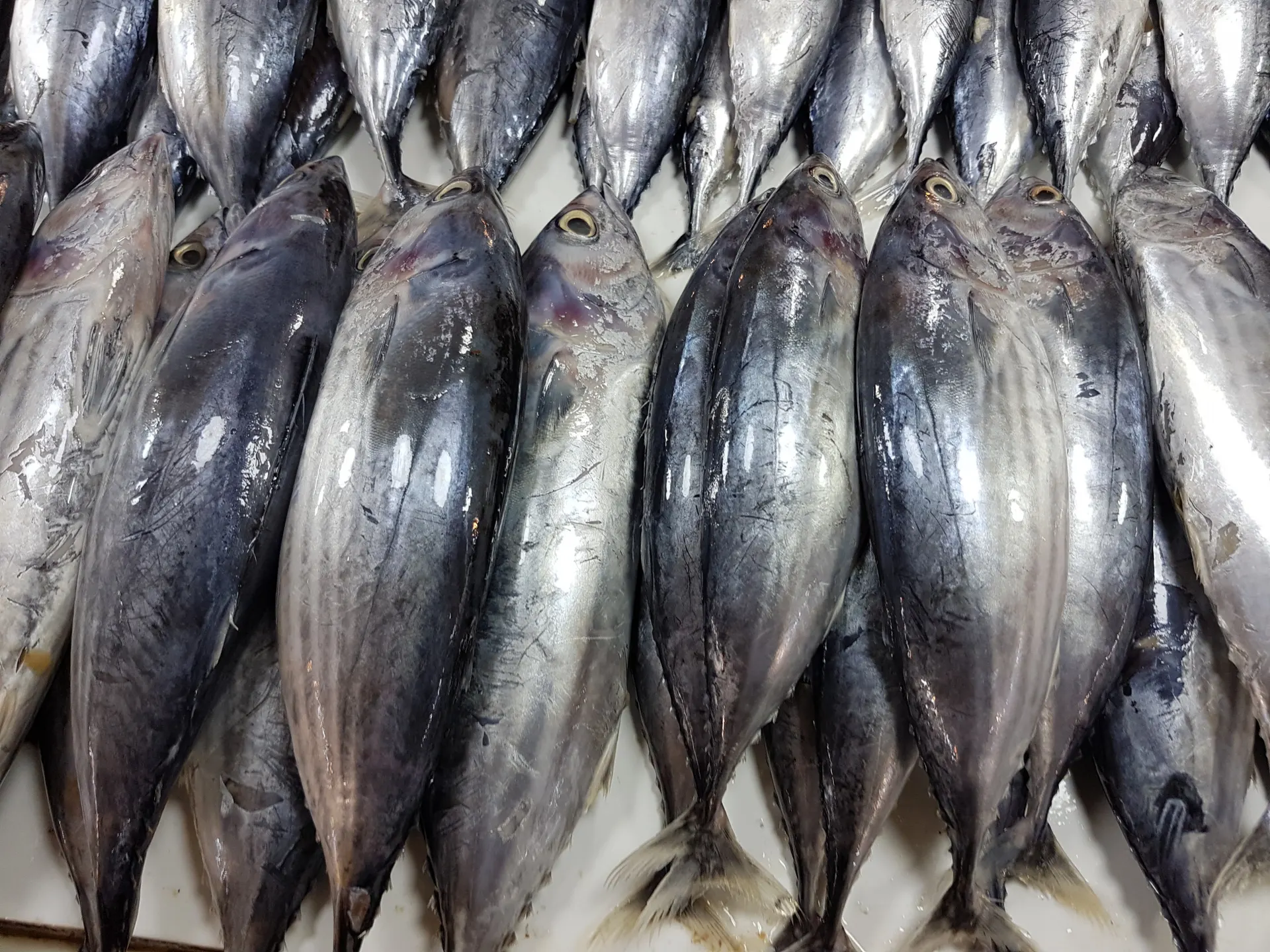
Skipjack Tuna
A smaller schooling tuna that may be caught as a target, retained for legal bait use or released.
- Behavior
- Schooling
- Pelagic tuna
- Planning Window
- Broad
- Warm months often emphasized
- Availability
- Mobile
- Follow surface activity
- Possible Uses
- Multiple
- Target, bait, or release
Overview
Skipjack tuna (Katsuwonus pelamis) are schooling pelagics that can be encountered while searching for tuna and billfish. They may provide light-tackle sport or be retained for legal food or bait use, but abundance and availability vary with water and forage.
Identification
Four to six dark longitudinal stripes along the lower sides and belly are a key identification feature. Skipjack have a streamlined body, a dark purplish-blue back and a series of small finlets behind the second dorsal and anal fins.
Role in the ecosystem
Skipjack feed on smaller fishes and invertebrates and are prey for larger pelagics. Their presence can be a useful sign when crews are searching for other offshore targets.
Seasonal planning
Skipjack can occur across a broad part of the year, but there is no dependable local peak window. Look for confirmed surface activity, birds, bait and current reports.
Where crews look
Surface activity
Birds, bait, and feeding fish can narrow the search, but confirm the species before making a retention or bait decision.
Named banks
Treat bank names as broad fishing areas, not year-round skipjack coordinates.
Water edges
Color and temperature changes can be useful when supported by live observations.
Floating habitat
Weed lines may hold bait and pelagic life; keep clear of debris and entanglement hazards.
Techniques and uses
🎣 Catching them
- Feathers and jigs: Match size, speed, hooks, and tackle to the activity and intended use
- Bait presentation: Cast or drift a legal baitfish when the school, tackle and surrounding traffic allow
- Popping: Cast small poppers into feeding schools for surface action
🔄 Using them
- Live bait: Use only legal retained fish, record trip-caught bait in the fishing log and minimize waste
- Food: Chill promptly if retaining a legal fish for the table
- Cut bait: Confirm current rules and minimize waste before using any retained fish as bait or chum
Conservation
Planning a mixed-pelagic trip?
Use recent reports and surface activity to set the target.