Striped Marlin
Kajikia audaxMarlín rayado
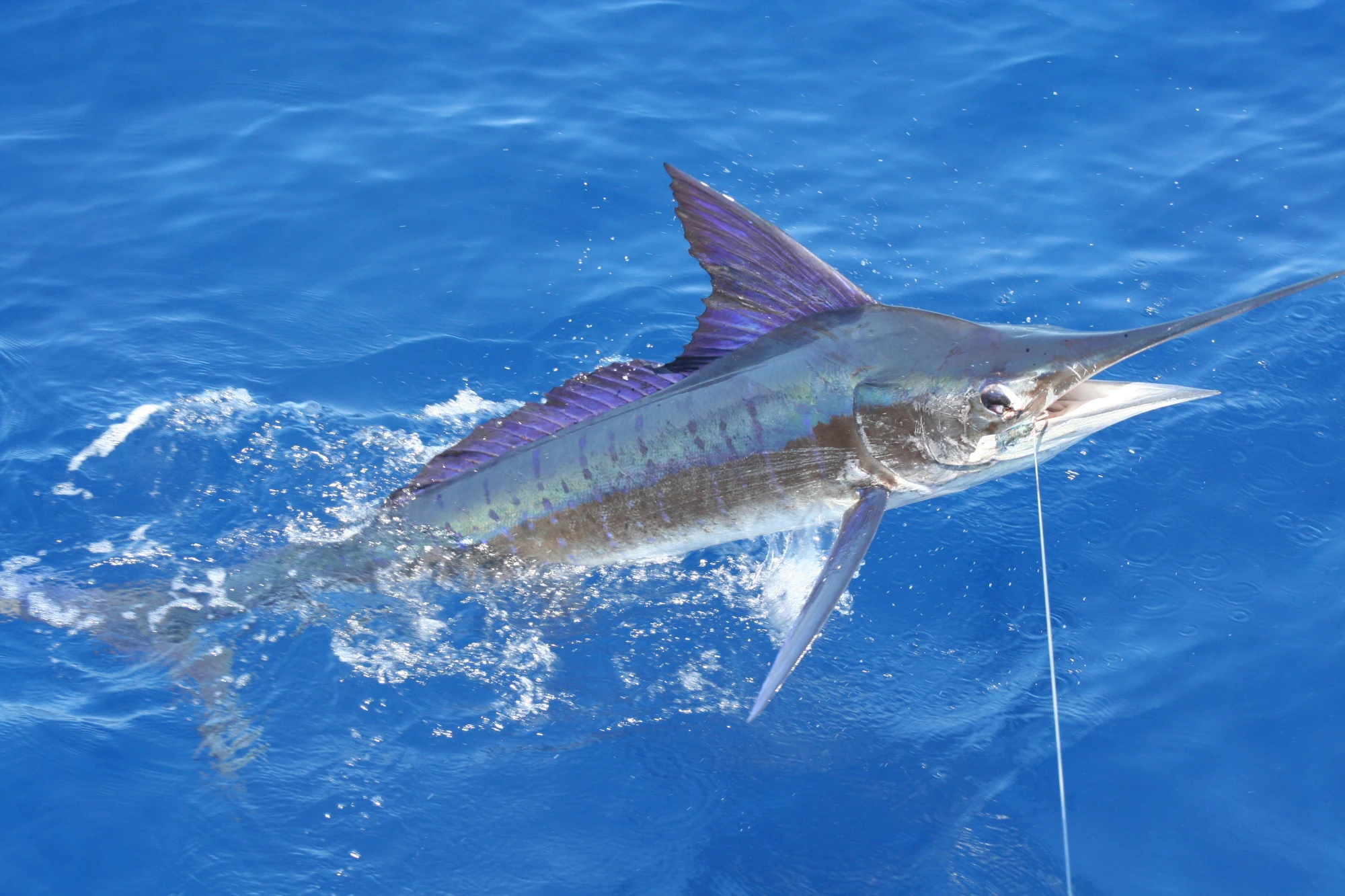
Crews target striped marlin with trolling spreads and bait presentations around bait concentrations and surface activity.
- Planning window
- October–April emphasis
- Where it lives
- Open ocean
- Fishing approach
- Trolling, bait presentation and visual searching
- What matters most
- Recognize feeding activity; release alongside
Fishing for striped marlin
Striped marlin are a common offshore target around the tip of Baja. They follow suitable water and prey, so productive fishing areas can change from day to day.
Trips can involve extended searching followed by short opportunities to present bait to visible fish. Ask the crew to explain the hookup procedure before lines go out. Discuss whether you want a focused billfish day or a plan that can switch to other available targets.
How to identify striped marlin
A tall, pointed first dorsal fin, round bill and blue vertical markings are useful clues. The dorsal is proportionally higher than a blue marlin’s. Bright bars can change in appearance, so do not rely on the presence of stripes alone.
NOAA identifies the species as Kajikia audax and notes its occurrence in the Pacific and Indian Oceans. Its diet includes baitfish and squid, helping explain why feeding signs are more informative than a fixed waypoint.
Biology and identification: NOAA Fisheries: species biology and habitat (opens in a new tab) ↗
Seasons in Los Cabos
October through April is the local Pacific-side emphasis. This is not the same calendar as La Paz or every other Baja port, and it does not mean striped marlin disappear from Cabo outside those months.
Ask whether the recent activity is a repeatable feeding pattern in reachable water or an isolated sighting. Winter wind and Pacific swell can affect the route during the main seasonal range.
Local calendar: BCS association’s Pacific-side guide (opens in a new tab) ↗.
Compare the full seasonal pictureHabitat and fishing grounds
Crews search offshore contours, bait concentrations and current transitions while watching for birds, surface feeding and visible marlin. Birds are evidence to investigate, not proof of the species beneath them.
Striped marlin spend much of their time in the upper water column. That makes surface observation valuable, but fish below the surface may not be visible or willing to eat. Named banks are broad search areas and can have very different conditions on successive days.
Understand Cabo’s coasts, banks and accessFishing methods for striped marlin
Search with a spread
Trolling keeps presentations working while the crew covers water. Watch the designated side of the boat, stay clear of other rods and ask how the crew wants a sighting called out.
Place a bait on a seen fish
A live or rigged bait can be presented to a fish spotted near the surface. Bait quality and an accurate approach matter. Let the crew explain the hook system before a take; a circle-hook presentation should not be treated like a forceful lure hook-set.
Work an active feeding area
When bait is concentrated, careful positioning may be more productive than continuing a long straight trolling route. Other boats, feeding wildlife and hooked fish all need room; crowding the action reduces safety and opportunity.
Ask these questions before booking
- How much usable bait will the boat carry, and is bait cost or collection time additional?
- Does the crew keep billfish in the water for release and explain how the angler should finish the fight?
- What is the realistic alternative if wind, bait or recent reports make the preferred area unsuitable?
Tell the operator about your experience, preferred method and group. Agree on the target, time on the water and release plan before the trip.
Handling and release
A release should be organized before hookup, with tools ready and a safe space for the angler. Avoid an unnecessarily prolonged fight and leave bill and leader handling to the crew.
Keep the marlin in the water; a quick alongside photograph is preferable to a deck photograph. Tagging is useful only through an appropriate program with trained handling and complete reporting, not as an improvised extra step.
Handling reference: IGFA release guidance (opens in a new tab) ↗.
Check licensing, limits and protected-area rulesQuestions about striped marlin
Is winter a good time for striped marlin in Cabo?
It falls inside the local October–April emphasis. The usable route still depends on weather, bait and recent activity. A winter booking should include a discussion of sea conditions and an alternative plan.
Are striped marlin the same as sailfish?
No. A sailfish has a very large, sail-like dorsal fin extending along much of the back. Striped marlin have a tall pointed first dorsal profile but not that broad sail.
Can I request catch and release?
Yes—make that expectation explicit before booking, and ask how releases and photographs are handled. A release plan should keep the fish alongside and avoid bringing it aboard.
Sources
These references cover identification, biology and regional fishing patterns. Follow the local calendar for seasonal context and the Mexican regulations guide for permits, retention and protected areas.
- NOAA Fisheries: species biology and habitat (opens in a new tab) ↗
- The Billfish Foundation: distinguishing billfish species (opens in a new tab) ↗
- BCS sportfishing association: Pacific-side seasonal guide (June 2026) (opens in a new tab) ↗
The Billfish Foundation: tag-and-release handling guide ↗ (opens in a new tab)
 Open ocean
Blue Marlin
Makaira nigricans
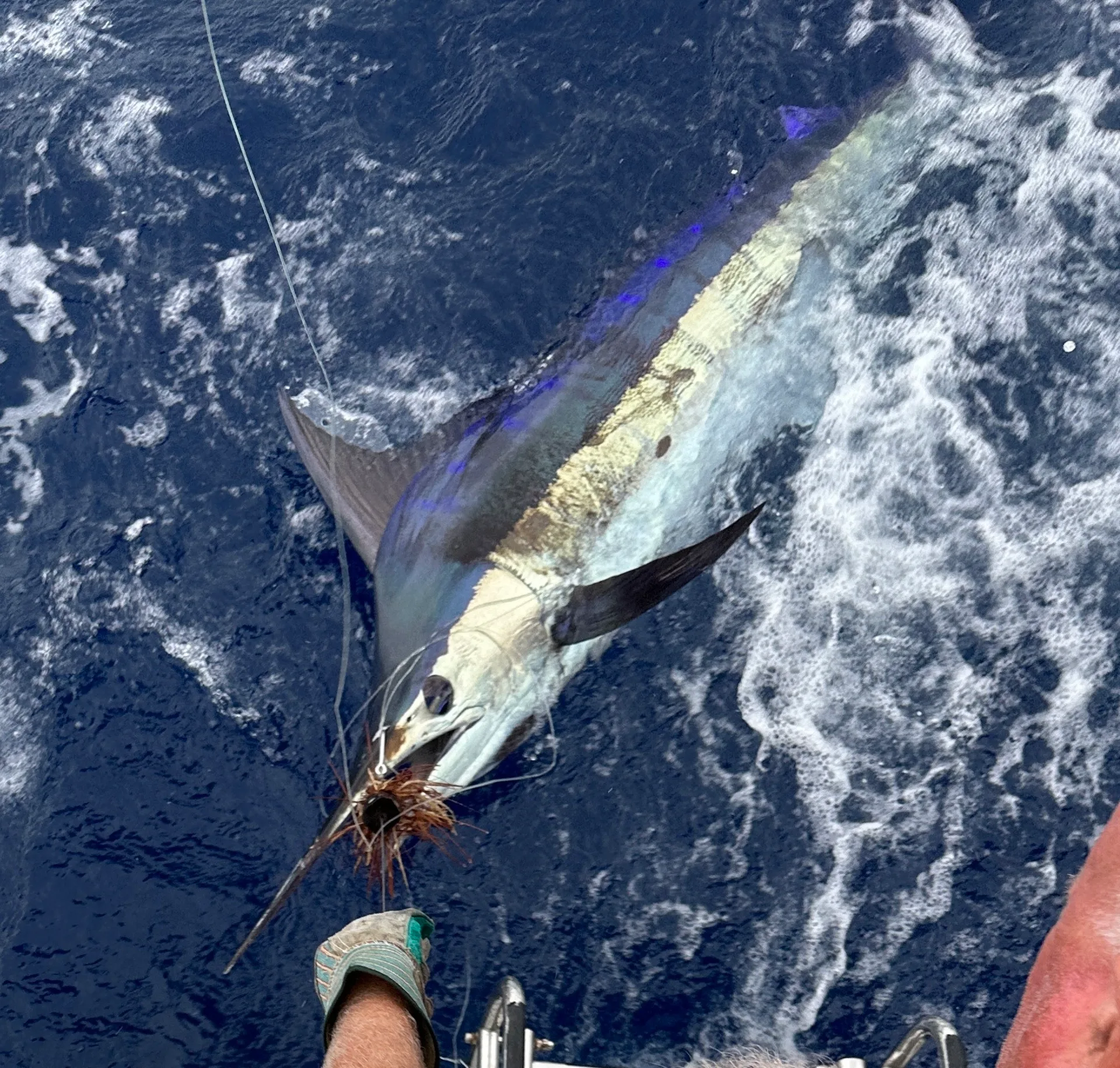
A warm-water billfish targeted offshore with trolling lures and bait. Boat range, tackle and release procedures need to suit large fish.
June–November emphasis
 Open ocean
Sailfish
Istiophorus platypterus
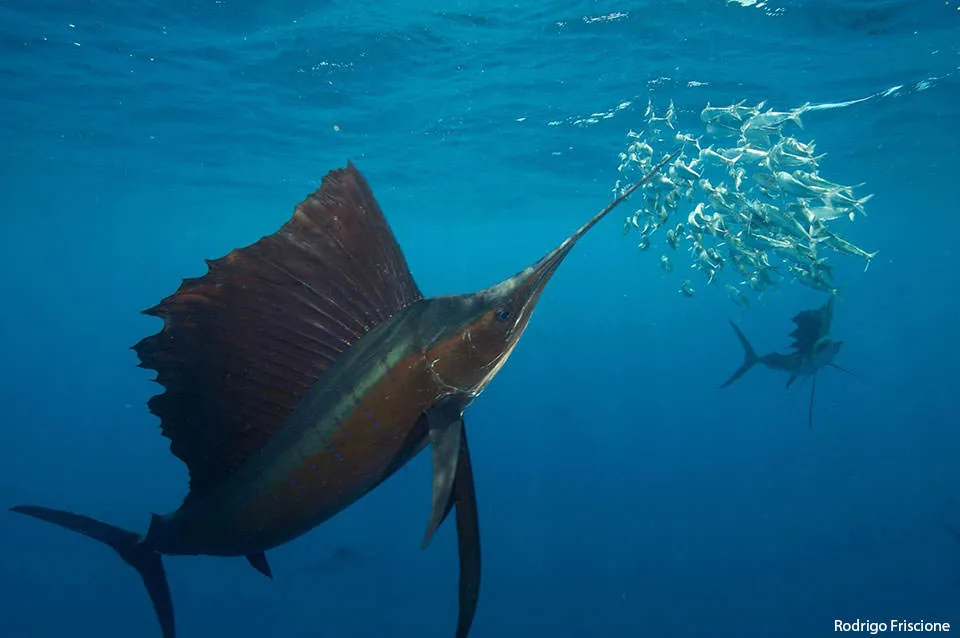
Recognizable by its large dorsal fin, sailfish are targeted with trolling spreads, teasers and bait. Keep released fish in the water.
May–July local emphasis; variable encounters
 Open ocean
Swordfish
Xiphias gladius
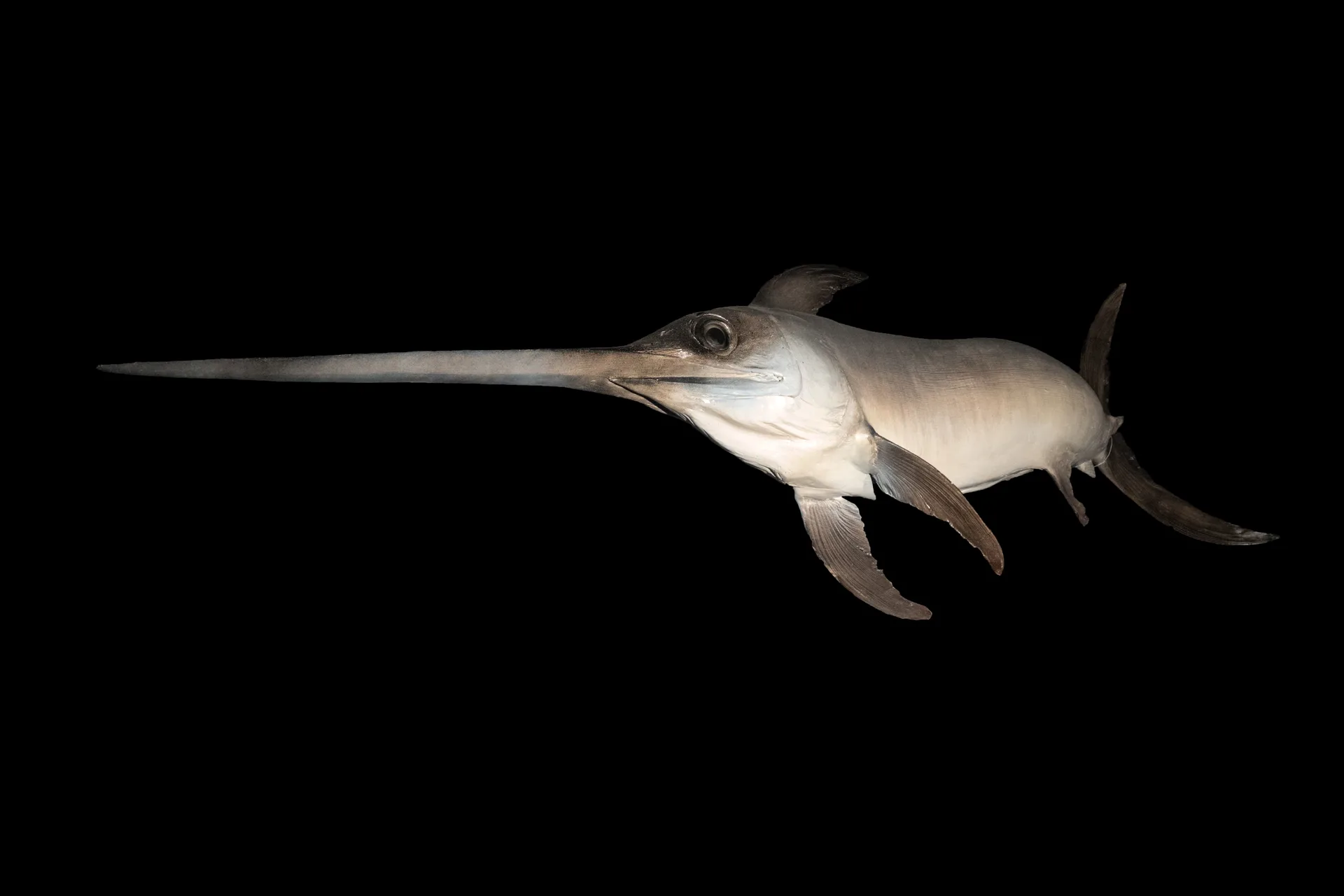
Swordfish trips require a specialist crew and suitable deep-water tackle. An occasional surface sighting calls for a different approach.
Specialized target; no dependable local monthly window