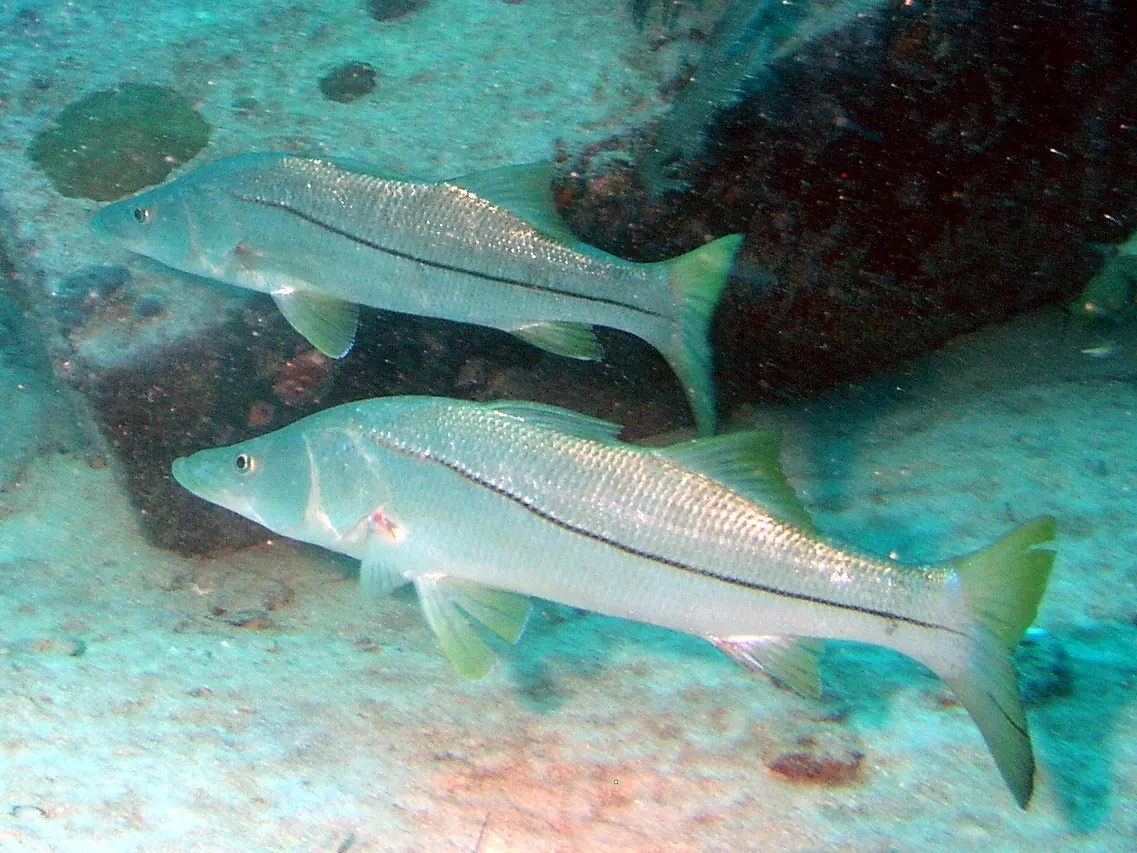
Snook
Several Pacific snook species use coastal and estuarine habitat in Mexico. Protected habitat and exact identification come before a fishing plan.
- Species
- Multiple
- Exact ID matters
- Planning Window
- Variable
- Species and access decide
- Habitat
- Coastal
- Some habitat protected
- Before Retention
- Identify
- Check current rules
Overview
Several eastern Pacific snook (Centropomus spp.) may be called robalo. They use coastal and estuarine habitats, but not every suitable-looking wetland is open to fishing.
Snook may occur along sandy beaches and around suitable coastal habitat. The San José del Cabo estuary is a protected ecological reserve, so focus fishing plans on legal public water and check current rules near any estuary or lagoon.
Identification
Snook have a distinctive elongated body with a prominent lower jaw, a forked tail, and a dark lateral line running from gill to tail. Their color varies from silvery-green to dark bronze-brown on the back.
Multiple eastern Pacific species share the name robalo or snook. Exact identification matters for biological claims and any species-specific rule.
Seasonal planning
No single local season applies to every Pacific snook species or habitat. Legal coastal access, habitat protection, bait and current conditions are more useful for planning than a broad month range.
Where fishing may be permitted
Open beach
Search legal public water for bait and clean surf without entering a protected estuary.
Rock-to-sand edge
Fish only where access, swimming traffic, and conditions allow safe casting.
Lagoon exterior
Protected-area boundaries and rules must be known before fishing near any mouth or wetland.
Local confirmation
Ask a licensed guide which species is present and where fishing is currently permitted.
Common techniques
Topwater lures
Match lure, hooks, leader, and timing to legal access, current conditions, and the intended release.
Soft plastics
Use an appropriate jig weight in open, legal water; do not cast into protected mangrove habitat.
Preparing a legal catch
If retaining a positively identified, legal fish from open water, cool it promptly and keep only what will be used. Release larger breeding fish and any fish whose identity or legal status is uncertain.
Conservation
Planning a snook trip?
Choose a guide who knows reserve boundaries, local species and careful release.