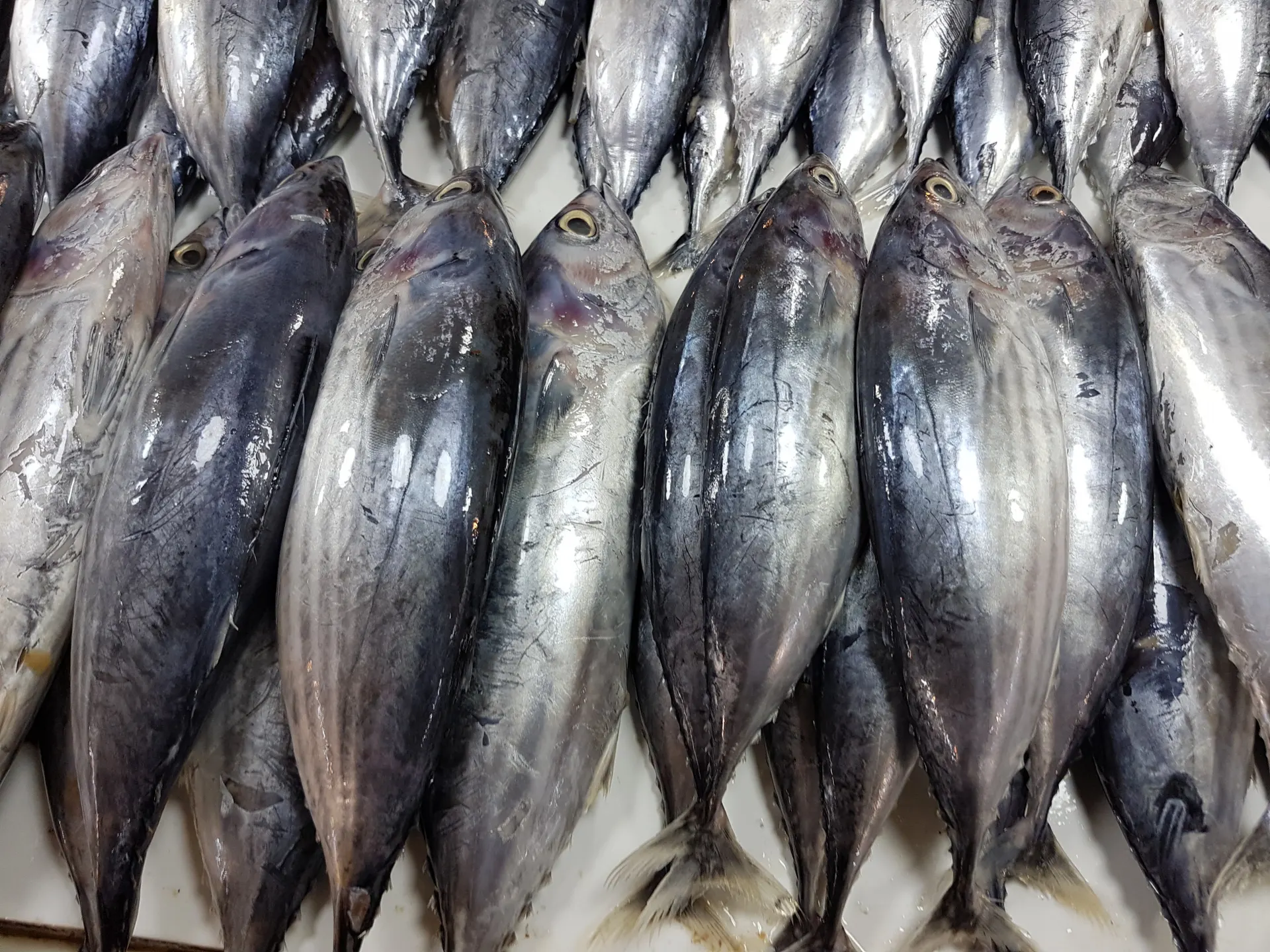
Skipjack Tuna
A smaller schooling tuna that may be caught as a target, retained for legal bait use or released.
- Behavior
- Schooling
- Pelagic tuna
- Planning Window
- Broad
- Warm months often emphasized
- Availability
- Mobile
- Follow surface sign
- Possible Uses
- Multiple
- Target, bait, or release
Overview
Skipjack Tuna (Katsuwonus pelamis) are schooling pelagics that can be encountered while searching for tuna and billfish. They may provide light-tackle sport or legal bait, but abundance and availability vary with water and forage.
Physical Identification
Skipjack are easily identified by the 4-6 dark horizontal stripes running along their silver belly (no other tuna has this pattern). They have a streamlined, torpedo-shaped body and a metallic blue-green back.
Role in the Ecosystem
Skipjack feed on smaller fishes and invertebrates and are prey for larger pelagics. Their presence can be a useful sign when crews are searching for other offshore targets.
Best Seasons
Skipjack can occur across a broad part of the year, with warm months often emphasized. They are not an “always available” fallback; look for confirmed surface activity, birds, bait, and current reports.
Hot Spots
Surface activity
Birds, bait, and feeding fish can narrow the search, but confirm the species before making a retention or bait decision.
Named banks
Treat bank names as broad working areas, not year-round skipjack coordinates.
Water edges
Color and temperature changes can be useful when supported by live observations.
Floating habitat
Weed lines may hold bait and pelagic life; keep clear of debris and entanglement hazards.
Techniques & Uses
🎣 Catching Them
- Feathers and jigs: Match size, speed, hooks, and tackle to the activity and intended use
- Live Bait: Chunk or live sardine on light spinning gear
- Popping: Cast small poppers into feeding schools for surface action
🔄 Using Them
- Live bait: Use only legal retained fish and minimize waste
- Food: Chill promptly if retaining a legal fish for the table
- Chum: Confirm local practice and disposal rules before using retained fish
Conservation
Planning a mixed-pelagic trip?
Use recent reports and surface activity to set the target.