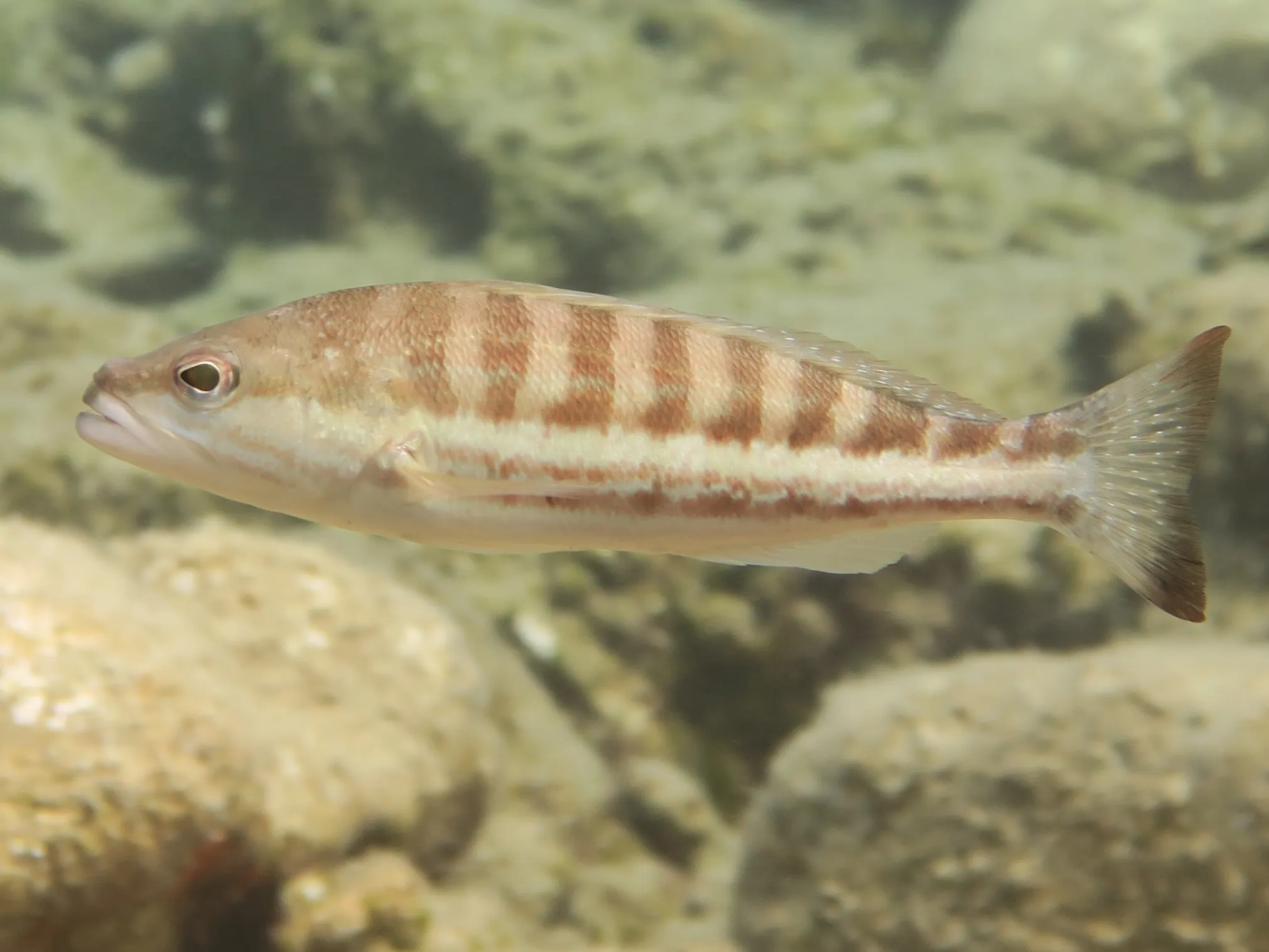
Cabrilla
A common name for several Baja reef fish—so identification comes before season, size, or retention advice.
- Possible Species
- Several
- Common name overlaps
- Planning Window
- Variable
- Species and water decide
- Habitat
- Reef
- Rock and transitions
- Before Retention
- Identify
- Check current rules
Overview
Cabrilla is used for multiple serranid fishes in Mexico, including spotted cabrilla (Epinephelus analogus) and flag cabrilla (E. labriformis). The shared name does not establish the species.
These fishes are associated with rocky and reef habitat, where structure can make fighting and release more difficult. Local species mix varies by habitat and area.
Physical Characteristics
Cabrilla have a typical grouper shape (robust body, large mouth) but are more elongated than true groupers. They're reddish-brown to olive with distinctive white spots covering their body and fins.
Several species are called cabrilla in Mexico, including spotted cabrilla (E. analogus) and flag cabrilla (E. labriformis). Identify the fish before applying biological or retention guidance.
Best Seasons
Season and depth vary with the actual species, site, water and current. Use recent local observations and identify the fish before applying seasonal guidance.
Hot Spots
Rocky points
Fish the safe outer edges of natural structure where current carries bait.
Nearshore reef
Use current charts and local knowledge; reefs can also be protected or hazardous.
Boulder transitions
Sand-to-rock transitions provide ambush cover for several fish called cabrilla.
Artificial structure
Fish only where fishing and anchoring are legal, using the captain's current charts and route.
Best Techniques
Bottom presentation
Match sinker, hook, leader, and tackle to depth, current, structure, bycatch, and the intended release.
Jigs and soft plastics
Use legal tackle appropriate to the site; avoid abandoned line and lead around sensitive reef habitat.
Table Fare
If retaining a legal, positively identified fish, cool it quickly, keep only what will be used and ask the crew about cleaning and transport.
Conservation
Planning a cabrilla trip?
Compare local reef knowledge, tackle, boundaries and fish-handling practices.