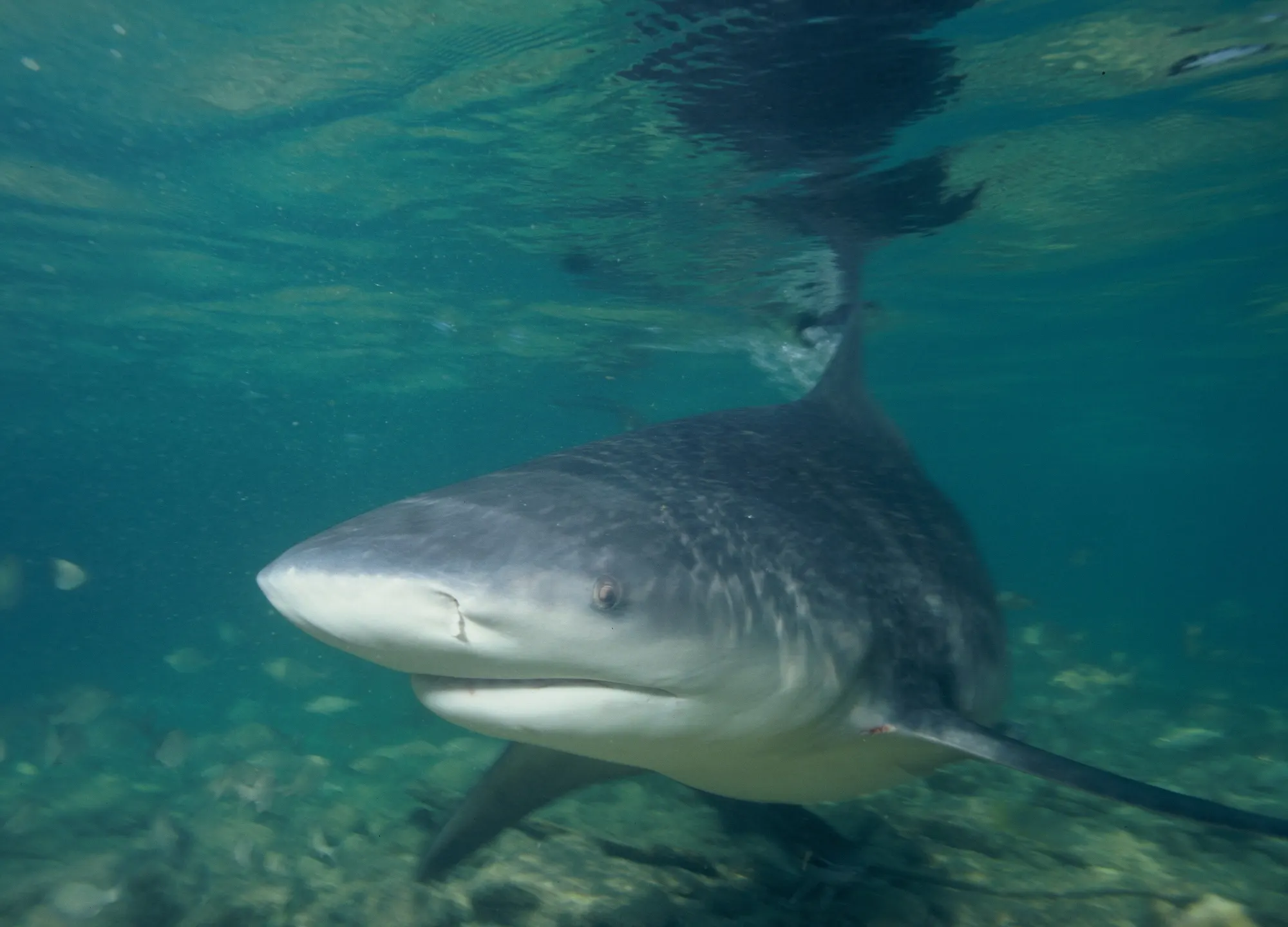
Bull Shark
A large coastal shark capable of using low-salinity water. Incidental encounters demand distance, correct identification, and a release plan.
- Animal Class
- Large shark
- No local average
- Local Season
- Unverified
- No published window
- Handling
- In water
- Public safety first
- Default Plan
- Release
- Check current rules
Overview
Bull Sharks (Carcharhinus leucas) are stocky coastal sharks with unusual tolerance for brackish and fresh water. Broad global habitat descriptions do not establish that a particular Los Cabos beach or estuary is a predictable fishing location.
An incidental encounter involves a large animal, heavy leader, hooks, and a moving boat or surf zone. Crew and public safety, protected habitat, and rapid release take priority over landing or photographing it.
Physical Characteristics
Bull Sharks have a stout, muscular body with a broad, flat snout and small eyes. They're gray on top and white below, with a distinctive blunt snout that gives them their name. Their dorsal fin is large and triangular.
Bull sharks can regulate salt balance and enter brackish or fresh water. Around public shorelines, keep fishing activity away from swimmers and protected habitat.
Best Seasons
No well-supported local seasonal window is available. Do not chum for or target sharks near swimmers, protected wetlands or busy shorelines.
Hot Spots
Coastal encounters
Keep shark fishing activity away from swimmers, busy beaches and protected estuaries.
Incidental bycatch
Prepare release tools before fishing any tackle that could hook a large shark.
Public water
Move away from swimmers, wildlife, and busy shorelines if shark activity develops.
Protected habitat
Check boundaries and current rules before fishing near any estuary, lagoon, or reserve.
Incidental Encounter Plan
Conservation
Ask about shark bycatch practices
Confirm how the operator avoids and releases shark bycatch before booking.