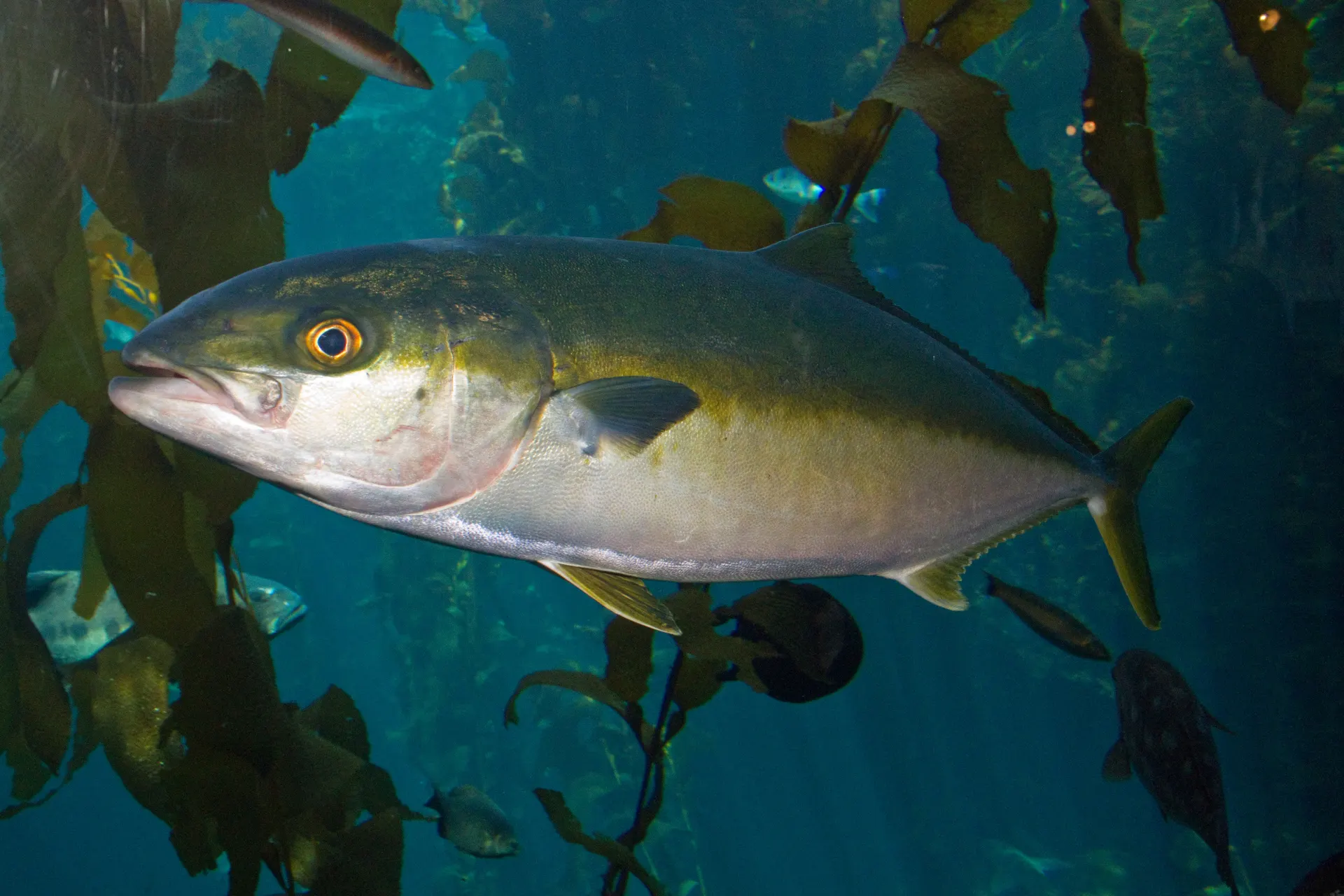
Amberjack
A structure-oriented jack whose exact identity, depth, and current conditions should shape the plan.
- Genus
- Seriola
- Exact species matters
- Planning Window
- Broad
- Conditions decide
- Habitat
- Structure
- Reef and bank edges
- Before Retention
- Identify
- Check current rules
Overview
Amberjack are members of the jack family associated with reefs, banks, wrecks, and other structure. A hooked fish may run toward cover, so tackle and drag should match the depth and habitat.
Several Seriola species occur in the eastern Pacific. A common name or photograph alone is not enough for a confident local size, season, or retention claim.
Physical Characteristics
Amberjack are deep-bodied fish with a blunt head and a distinctive amber-colored stripe running along their side from nose to tail. They have a forked tail, dark blue-green back, and silver-white belly.
Several Seriola species occur in the region and common names can overlap. Confirm identification before applying a size, range, or retention claim.
Best Seasons
Late spring through fall is a broad planning range for structure-oriented jacks, but the actual species, depth, current, and sea state determine the tactic. Do not treat a generic “amberjack” calendar as an identification guide.
Hot Spots
Bank edges
Current and bait around structure may concentrate jacks along bank edges.
Legal reef structure
Use current charts and confirm protected-area and anchoring rules before fishing.
Depth transitions
Tackle, release survival, and species identification become more important as depth increases.
Recent fleet sign
A recent verified catch is more useful than a distance copied from an old guide.
Best Techniques
Vertical jigging
Choose jig, line, leader, and hooks for the actual depth, current, target, and release plan.
Live bait
Use legal bait and rig it for the structure, target, and circle-hook requirements that apply.
Cut bait
A bottom presentation can attract multiple species; identify the catch before retention.
Table Fare
Handling quality changes quickly in the heat. If retaining a legal, positively identified fish, confirm how it will be bled, iced, cleaned and transported.
Conservation
Planning an amberjack trip?
Compare identification skill, tackle, handling and protected-area awareness.